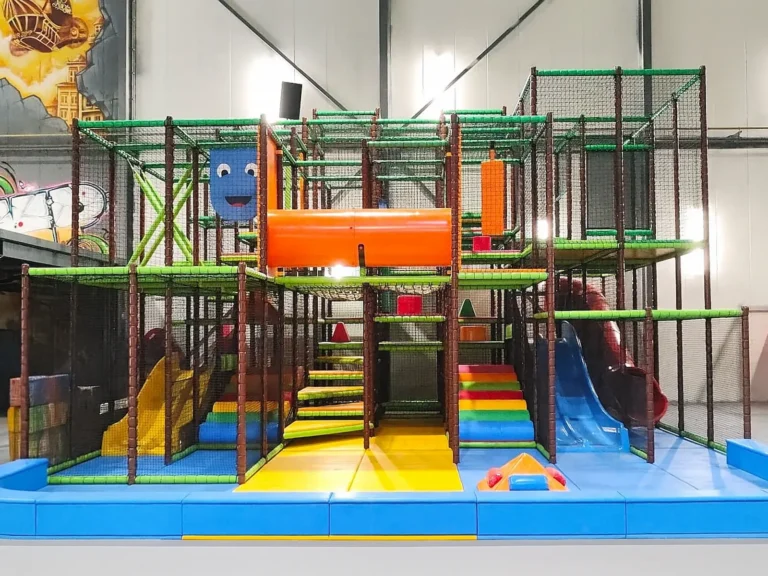
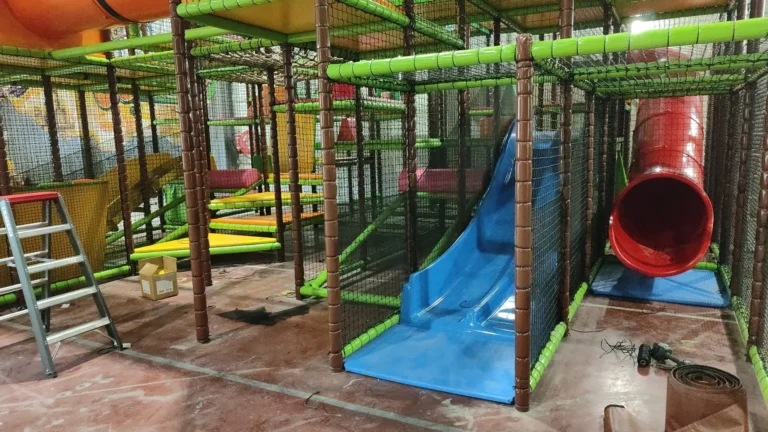
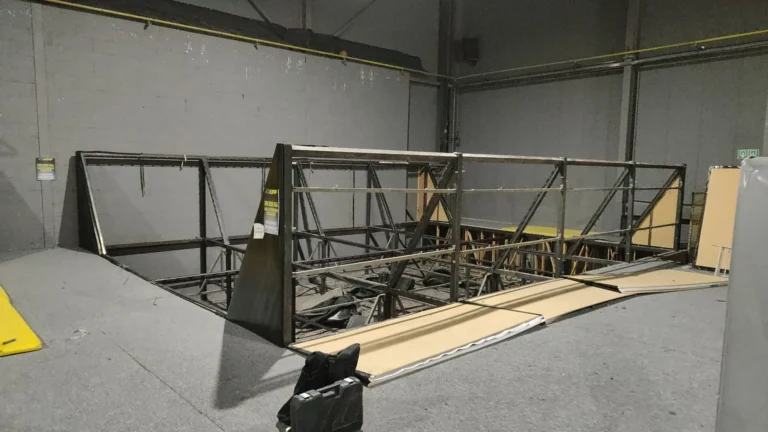
A practical guide for investors and operators of family entertainment centers.
TL;DR
- FEC attractions should be selected according to the business goal, age of guests and technical limitations, and not to a momentary fashion.
- Trampolines support group movement, Ninja Park creates a challenge, and Laser Tag strengthens the birthday and event offer.
- The most important indicator is the revenue and experience generated per square meter.
- Before purchasing, you need to calculate the full cost of service, energy, personnel, parts and downtime.
The most important decisions at a glance
| Format | Best group | Strength | Limitation |
|---|---|---|---|
| Trampoline park | School children, teenagers, groups | High activity and sports activities | Large height and surface |
| Ninja Park | Families and children 8+ | Challenge, progression and good rotation | Requires gradation of difficulty |
| Laser Tag | Older children, teenagers, companies | Birthdays and group events | Scenario and equipment support |
| Interactive zone | Wide age range | Repeatability thanks to points and records | Reliability and electronics service |
Action plan
- Define the customers you want to attract or retain.
- Check height, load capacity, installations and realistic space available.
- Compare bandwidth, play time and possible additional products.
- Calculate the total cost of ownership, not just the purchase price.
- Test whether the new zone fits the brand and the current guest path.
One of the most important moments in the development of each Family Entertainment Center is the decision to expand the facility. After two or three years of operation, many owners notice that children grow up, competitors introduce new solutions, and the novelty effect gradually fades away. That’s when the question arises: what’s next?
Is it worth investing in a trampoline park? Or maybe Ninja Park or Laser Tag would be a better solution?
At first glance, it seems that the answer depends primarily on budget. In reality, however, this is one of the most strategic decisions that the owner of the Family Entertainment Center makes.
It’s not just about buying a new attraction. The idea is to create a space that will generate more revenue, attract new customers and retain current guests for years to come.
The biggest mistake is to choose an attraction just because it is fashionable or was introduced by a competitor. It is much more important to understand how a given investment will affect the facility’s entire business model.
Start with customers, not attractions
The first question should not be: “What attraction should I buy?”, but:
“Who are my customers today and who do I want them to be in one or two years?”
Each new zone changes the structure of visitors.
Families with children up to about 8-10 years of age expect, above all, safety, good visibility of children and a comfortable space to spend time together. Children aged 8 to 13 begin to look for greater challenges, competition and activities requiring skill. Teenagers and adults increasingly expect sports, integration and competition attractions.
If your facility is currently visited mainly by families with small children, adding a very dynamic zone can completely change the character of the place. This will not always be beneficial.
On the other hand, if you notice that children stop visiting your facility after a few years because they have “outgrown” the classic play structure, expanding it with a Ninja Park, trampoline zone or Laser Tag can effectively retain customers for years to come.
More and more modern Family Entertainment Centers are designed today so that siblings of different ages can play there at the same time. It is the diversity of attractions that makes whole families spend more time at the facility and are more willing to come back.
Every square meter should make money
Just a few years ago, investors asked primarily about the cost of creating attractions.
Today, they increasingly analyze a completely different indicator – the revenue generated by each square meter of space.
This is one of the most important changes in the approach to Family Entertainment Center design.
An attraction covering 300 m² will not always be a better investment than one using only 150 m². If a smaller zone can serve a similar number of customers, generates more revenue and requires fewer employees, it may turn out to be much more profitable.
Therefore, when planning expansion, it is worth analyzing not only the investment cost, but also:
- number of users simultaneously using the attractions,
- impact on the average length of stay of customers,
- possibility of organizing birthdays and events,
- impact on gastronomy sales,
- operating and servicing costs,
- potential to increase the number of returning customers.
It is these indicators that determine the success of the investment.
Does your space allow for expansion?
Each attraction has its own technical requirements.
A trampoline park requires a high room height and a large area. Ninja Park needs slightly less space, while maintaining high sports potential. Laser Tag, on the other hand, can function even in rooms with a lower height, especially when designed as an independent zone.
If you have limited hall height, Ninja Park or Laser Tag will often prove to be a much better solution than a classic trampoline park.
Therefore, the analysis of building parameters should always precede the selection of attractions.
You are not purchasing devices. You build customer experience.
This is one of the biggest changes that have occurred in the Family Entertainment Center industry in recent years.
Guests no longer come only for the trampolines.
They come to experience something special.
The best performing entertainment centers are designed as a coherent user journey. The child moves smoothly between subsequent zones, discovering new challenges, earning points, competing with siblings or parents and wanting to come back again.
Therefore, interactive solutions such as electronic scoring systems, team games, LED screens, lighting effects and time challenges play an increasingly important role.
This does not always mean the need to purchase expensive equipment. Often, properly designed interaction can significantly increase the attractiveness of a classic play structure.
What do you really want to achieve?
Each investment should pursue a specific business goal.
If you want to extend the stay of families, a Ninja Park or a family obstacle course will be a perfect solution.
If you want to attract older children and teenagers, it is worth considering Laser Tag or more advanced sports zones.
If you are planning to develop the market for birthdays, corporate events or integration events, Laser Tag can become one of the strongest pillars of revenue.
The trampoline park works very well as a place for sports classes, school groups and activities organized outside weekends.
The most important thing, however, is that each new attraction pursues a clearly defined business goal.
The cost of investment does not end with the purchase
Many investors only compare the purchase price of devices.
This is a serious error.
A modern Family Entertainment Center should be analyzed through the prism of total cost of ownership.
It’s worth answering a few questions.
Does the attraction require additional staff?
How often will it need service?
What are the energy costs?
What is the availability of spare parts?
Is it easy to upgrade in the future?
Only the analysis of the total operating cost shows the actual profitability of the investment.
Does the new attraction fit the character of your brand?
This is an element that is often omitted.
If your Family Entertainment Center builds the image of a family, safe and friendly place for the youngest children, it is worth maintaining this consistency also during expansion.
This does not mean giving up modern attractions.
On the contrary.
You can create a bright and safe Ninja zone for entire families, trampolines combined with interactive movement games or a modern Laser Maze using light, reflexes and cooperation instead of the classic game with weapon replicas.
The best Family Entertainment Centers do not copy the competition.
Create your own style.
An attraction that sells itself
The visual attractiveness of space is also becoming more and more important.
Guests are eager to post photos and videos from their visit on social media. A properly designed attraction becomes not only a place of fun, but also an effective marketing tool.
Effective lighting, characteristic architectural elements and well-designed photo spots increase the recognition of the facility and help acquire new customers practically without additional advertising expenses.
What development path should I choose?
For most Family Entertainment Centers, gradual expansion is the best solution.
The first stage could be the Ninja Family Zone, which allows you to keep older children with relatively low investment costs.
The next step may be a small trampoline area, if the building parameters allow it.
Only at a later stage is it worth considering Laser Tag or Laser Maze, especially when the development of the market for birthdays, team-building events and teenage customers is planned.
Summary
Therefore, the decision to expand should be made not on the basis of manufacturers’ catalogues, but on the basis of customer analysis, business model, technical capabilities of the facility and long-term development strategy.
A modern Family Entertainment Center today is not built around a single attraction.
They are built around experiences, emotions and a well-thought-out business strategy.
It is what makes guests come back, recommend the facility to their friends and become its best ambassadors.
Related materials Indoor Play Concept
- Modernization and reconstruction of playrooms
- ROI calculator
- 3D projects
- Consultation with the IPC team
Do you have a project or a working object? Arrange a consultation with Indoor Play Concept.