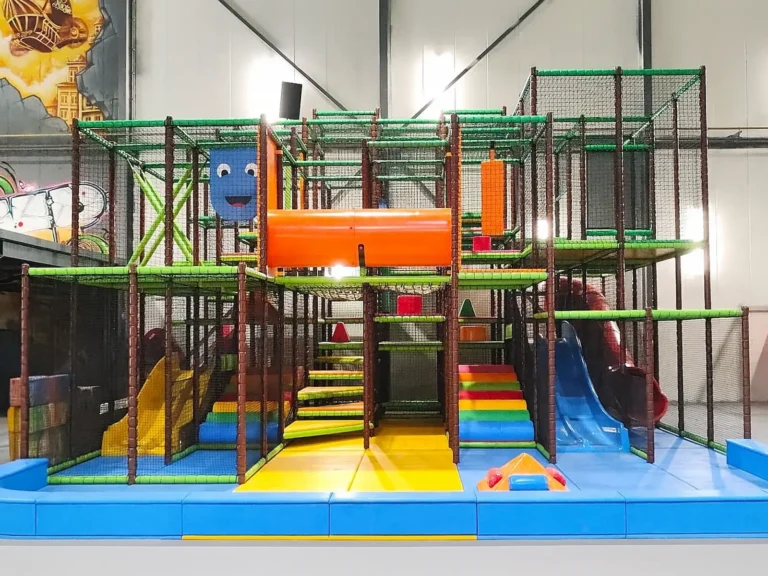
An Indoor Playground Audit and safety certifications for indoor playgrounds, soft play areas, and trampoline parks are not only a requirement under EN 1176 and EN 1177. Above all, they are part of conscious, professional management of an entertainment venue, a Family Entertainment Center, or a play area. A well maintained space means fewer faults, longer equipment life, and a higher level of safety, which directly improves owner satisfaction and guest comfort. A properly prepared Indoor Playground Audit also provides strong support for service planning and helps you look at the venue from a broader perspective. Alongside technical issues, you can also identify opportunities for upgrades and the introduction of new solutions.
TL:DR
- An Indoor Playground Audit and certification are required under EN 1176 and EN 1177 and are a key part of responsible venue management.
- Good preparation for an Indoor Playground Audit reduces the risk of faults, extends equipment lifespan, and increases safety.
- An Indoor Playground Audit has an advisory role and highlights risks, service priorities, and improvement opportunities.
- The inspection confirms compliance with standards and ends with accreditation and a certificate issued by an external body, for example TÜV Benelux.
- Preparing the documentation is crucial: specifications, manuals, certificates, inspection reports, a logbook, and venue rules.
- Before the Indoor Playground Audit, it is worth completing a visual check of structures, nets, mats, soft play panels, and trampoline elements.
- A checklist for an Indoor Playground Audit helps you organize actions and plan servicing and modernization.
Why an Indoor Playground Audit is also a chance to grow your venue
It is worth remembering that guests quickly get used to existing attractions and their expectations rise. A venue that does not evolve starts to lose its appeal. An Indoor Playground Audit therefore becomes not only a verification tool, but also a trigger for growth. It can help you identify zones that need refreshing, plan expansions, and even introduce entirely new modules that increase competitiveness. In practice, we often suggest solutions that improve the structure and recommend innovative products that genuinely raise the value of the play space and encourage customers to return more often.
Indoor Playground Audit vs inspection: the most important differences
At the start, it helps to understand the difference between an audit and an inspection. Although these terms are sometimes used interchangeably, they serve different purposes.
An Indoor Playground Audit is advisory in nature and focuses on process effectiveness and on identifying areas that need improvement. It points to risks and opportunities to improve how the venue operates. It can cover safety, management, and even marketing. In the context of indoor playgrounds, an Indoor Playground Audit helps you assess the condition of the venue, identify faults and service priorities, and propose actions that increase the functionality of the space.
An inspection, on the other hand, focuses on verifying compliance with applicable regulations, standards, and procedures. Its outcome is accreditation and a certificate issued by an external body such as TÜV Benelux. It is a supervisory activity that refers to the actual state of the venue and the fulfillment of requirements. In practice, an Indoor Playground Audit supports development, while an inspection confirms formal compliance.
How to prepare documentation for an Indoor Playground Audit
Before an Indoor Playground Audit, it is worth preparing the documentation properly. Collecting a complete set of technical materials shows a professional approach and allows the auditor to verify compliance with standards efficiently. The documentation should include, among other items:
- Technical specifications describing the structure, materials, and the set of spare parts
- Operating and maintenance manuals defining correct use and required safety clearances
- Certificates and declarations of conformity confirming compliance with EN 1176, EN 1177, and EN ISO 23659
It is also important to have inspection reports, a playground logbook containing information on periodic inspections, repairs, and ongoing maintenance, as well as the current venue rules and staff safety procedures.
The set should be complemented by a risk assessment and proof of staff training, especially if new equipment has been introduced or new staff members have joined.
Visual review before an Indoor Playground Audit
A good practice before an Indoor Playground Audit is a thorough visual review of the venue. Assess the technical condition of the structure, the stability of connections, and the quality of safety nets, mats, and soft play panels. All elements should be free of damage, wear, exposed foam, or protruding metal components. In trampoline parks, special attention is paid to mats, springs, covers, and the padding in safety zones.
Surfacing, HIC, and on site conditions
For impact attenuating surfacing, it is important to confirm that it meets the critical fall height requirement, HIC, both through technical checks and up to date test documentation.
In indoor venues, the review also covers lighting condition, ventilation, clear evacuation routes, and fire performance requirements for materials, which are especially important for multi level structures.
The auditor’s visit: how to prepare the play area and what to avoid
Cooperation with the auditor goes most smoothly when the venue is ready and documentation is well organized. The most common mistake is leaving everything until the last minute, which increases the risk of gaps.
It is also risky to neglect ongoing maintenance and rely only on older certificates, which do not confirm the current condition of the equipment. Temporary, improvised repairs are not recommended either, because they may worsen the outcome of the Indoor Playground Audit.
During the visit itself, it is best to limit children’s access to the play area or schedule the Indoor Playground Audit outside opening hours. This allows the auditor to verify the venue freely and complete any necessary measurements.
Focus on safety: use the Indoor Playground Audit checklist and contact us
Good preparation for an Indoor Playground Audit is not only a chance to achieve a positive result. It also meaningfully improves safety, makes service planning easier, and helps you identify growth opportunities for the venue. It is worth using a checklist that keeps actions organized and ensures that no key element is missed.
Our Indoor Play Concept team is ready to support you throughout the process, with guidance on standards and recommendations for modernization.
If you want to prepare your venue for an Indoor Playground Audit in a comprehensive and professional way, download the checklist and contact us. Together, we will make sure your play space is not only compliant, but also attractive, modern, and safe for the youngest users.