There are decisions in hotel management that seem small at first, and later turn out to be game changing. A well designed hotel playroom, thoughtfully integrated into the space, is one of them. Before the soft modules, ball pits, and the wow effect appear, you need to start with something many investors skip, and absolutely should not: solid market insight, a quick business plan, cost analysis, and a conscious decision on whether a hotel playroom makes sense, and if so, how large it should be.
That is the foundation everything else is built on.
Step 1: Check whether a hotel playroom meets a real guest need
Before you even think about adding a children’s zone, pause for a moment. Creating a hotel playroom without a needs analysis is like opening a restaurant without checking whether people actually like the cuisine you want to serve. The key question is: do your guests truly need a play zone?
Surprisingly often, you can find the answer in a single weekend by observing families at your hotel. Children who have nothing to do is a stronger signal than any statistics. Another point is the impact a hotel playroom can have on the business itself: will it keep guests longer, raise the perceived standard, increase family satisfaction, improve reviews, and take pressure off staff?
These are not minor details. They are real indicators that can change the economics of the property.
Step 2: A quick business plan and budget, how to approach it sensibly
A quick business plan does not need forty pages. In practice, it is about defining who visits your hotel, what your competitors offer, what it will cost to create the zone, and what its goal is: raising the hotel’s standard, encouraging families to stay longer, standing out in the region, or strengthening the image of a family friendly place. Simple assumptions lead to very concrete decisions, and to zones that work, instead of merely taking up space.
It is worth remembering that a hotel playroom can be developed in stages, starting with a smaller area and expanding it as you observe the results. This is a healthy, rational path.
Step 3: Choose a solution that fits the hotel and does not disrupt guest comfort
Only then do you move on to the play zone itself. This is not a set of random elements. It is a safe, soft space that supports motor skills, gives children freedom of movement, and at the same time avoids the noise and chaos typical of large netted structures. A well designed hotel playroom calms parents, engages children, organizes the space, reduces the burden on staff, and extends guests’ time on site. It sounds practical, but it can feel like magic.
Soft Play works especially well in hotels where children have their own space and parents have peace of mind, which naturally translates into higher ratings and more return visits. A property with a well planned children’s zone sends a clear message: “We genuinely think about families.”
Step 4: Plan the space so the hotel playroom works for you, not against you
The most common mistakes come not from a lack of good intentions, but from designing by eye. That is why it is worth avoiding:
- buying elements from different sources, which creates visual and quality chaos
- using overly loud colors
- squeezing the zone next to the main entrance doors
- skipping a guest flow analysis
- designing the look without thinking about function
A hotel playroom should make life easier for parents and staff, not complicate it.
Step 5: Match size and functions to the hotel’s capabilities
Depending on the size of the property and the available space, a hotel playroom can take different forms.
In smaller areas, solutions that offer lots of play in a compact footprint work best: a ball pit, steps, a ramp, and a few combined modules. Larger spaces allow you to create an expanded course, a bridge or tunnel, a separated toddler zone, soft climbing, and a theme that becomes the hotel’s signature.
Step 6: Keep design and delivery within one consistent standard
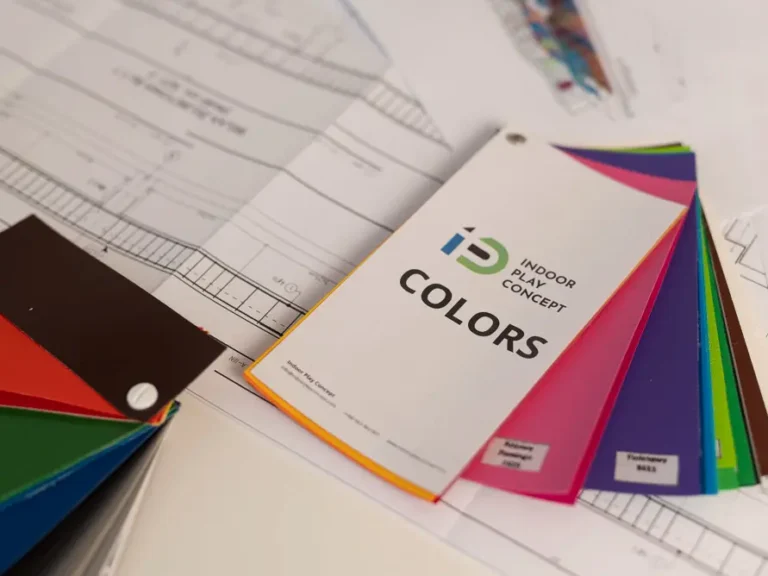
At IndoorPlaygroundConcept, we create Soft Play zones with precision. We analyze the space down to the centimeter, design the concept and a 3D visualization, manufacture the modules in Poland using premium materials, install them, and provide operating instructions. We choose colors and functions not only for aesthetics, but above all for children’s needs, and that is what makes the biggest difference.
Why a hotel playroom pays back
Because it works on economic, brand, and emotional levels at the same time. Longer stays mean higher revenue, greater comfort builds better reviews, and better reviews attract more guests. A parent who can truly relax without pressure comes back.
Soft Play is not just equipment. It is a tool that can change how the whole hotel operates. Designed thoughtfully, it becomes a natural magnet for families. Designed poorly, it becomes a problem. That is why it is worth doing it right from the very first step.
Want to implement a hotel playroom with IndoorPlaygroundConcept?
If you are planning a hotel playroom and you want a solution that raises your standard, supports your team, and genuinely drives results, get in touch with us. IndoorPlaygroundConcept will guide you through the entire process, from analysis and design to production and installation.